No-Shows
The Real Cost of No-Shows: How Much Missed Appointments Cost Your Salon (and How to Reduce Them)
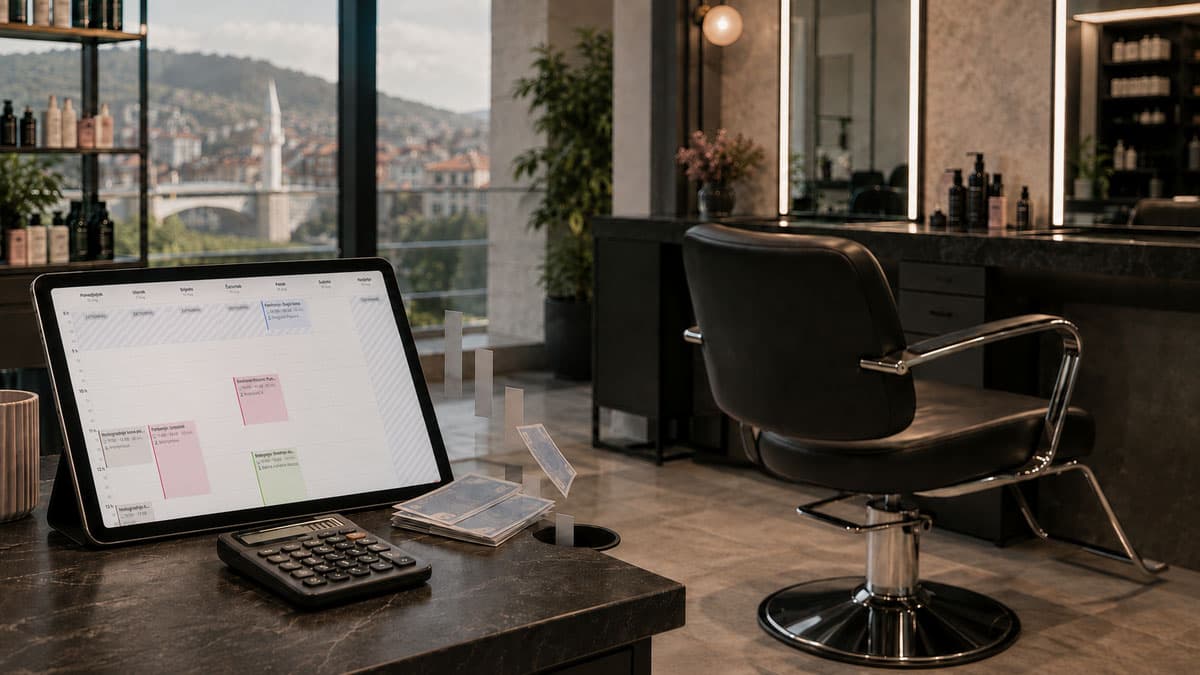
Key insight: An empty slot in your salon isn’t a coffee break — it’s a direct financial loss. Rent, utilities and wages keep running whether the chair is full or not, and when a client doesn’t show up, that hour is gone for good. If you’ve been wondering how to reduce no-shows in a hair salon, start with the math below — and then with automatic reminders, which cut no-shows by up to 50%.
How much does a no-show cost me?
Salon owners often treat a no-show as bad luck — an unavoidable part of the job. When a client doesn’t turn up, the first thought is usually “no big deal” or “finally, a minute for coffee.”
But once you convert that coffee into dollars, it starts to taste bitter. The money lost to forgotten appointments is rarely added up on a monthly or yearly basis — and that’s exactly why it looks smaller than it is.
Quick calculation: how much are you really losing?
Take a typical salon where a standard service — a cut and blow-dry, a facial, a therapeutic massage — costs $50.
- 1 no-show per week: $50
- Monthly loss (4 weeks): $200
- Yearly loss (12 months): $2,400
Now say your salon has just 3 to 5 empty slots a week because clients forgot they booked. That’s $600 to $1,000 a month. Over a year, it’s $7,200 to $12,000 in pure loss — money that could have covered several months of rent, new equipment or your entire marketing budget.
Use this as a quick no-show calculator: swap in your average ticket and your real weekly no-shows. And that’s before counting the product you mixed or the client you turned away.
Why clients forget appointments
Most no-shows aren’t rude clients — they’re forgetful ones. Studies on missed appointments keep finding the same top reason: people simply forgot.
Manual booking makes it worse. When appointments are arranged through Instagram DMs, text messages or a paper book, the agreement feels casual. The client books “on the go,” in a hurry, and if they never get a written confirmation or a reminder, life gets in the way and the appointment quietly evaporates from their schedule.
There’s a second reason: no easy way to cancel. Calling feels awkward, so a client who can’t make Wednesday at 3 PM often just doesn’t show up.
How to reduce no-shows in a hair salon
Five habits cover most of the problem:
- Send automatic reminders. An SMS or email reminder 24 to 48 hours before the appointment fixes the “I forgot” problem in most cases. Set it once and it goes out on its own.
- Confirm every booking in writing. A confirmation with the date, time, service and address turns a casual “see you Wednesday” into a real commitment.
- Have a clear cancellation policy. Put it on your booking page: free up to 24 hours before, anything later counts as a no-show. Clients respect a rule they’ve actually seen.
- Ask for a deposit on high-value services. For a $150 color correction or a bridal package, request a deposit when you confirm — a bank transfer, or cash at the salon — and note it in the booking.
- Make rescheduling easy. If a client can move their appointment in two taps, they’ll move it instead of skipping it — and the freed slot goes straight back on your booking link.
Cancellation vs. no-show: not the same thing
Both cost you, but not equally:
| Situation | What it looks like | Financial impact |
|---|---|---|
| Cancellation | The client lets you know in time (e.g. the day before). | Medium. You can offer the slot to someone else — once it’s free, it shows up on your booking link immediately. |
| No-show | Total uncertainty. The salon is ready, your stylist is waiting, the clock is running, the client never appears. | Maximum. The time is gone and no one can pay for that slot anymore. |
The goal isn’t zero cancellations. The goal is to turn no-shows into early cancellations, so you can refill the slot.
The hidden costs of disorganized booking
Beyond the direct dollar loss, a chaotic schedule carries costs that are harder to see:
- Lost focus and energy. Stopping mid-service to answer a text from someone who wants to move their appointment — again.
- An unhappy team. If your stylists work on commission, every no-show cuts their pay directly. Over time, that sours the mood and adds tension.
- Stress for you. Never being sure whether tomorrow’s schedule is right, and having to remember every detail yourself.
- Damaged relationships. Clients who get double-booked or forgotten don’t complain — they just don’t come back. More on that in how poor appointment management damages your client relationships.
How Buky fills empty slots without extra work from you
Most salon owners we meet are playing “human alarm clock.” Typing “Just a reminder about your appointment tomorrow at 12” to every client eats your evenings — and there’s never enough time in a salon as it is.
Buky is built to take that job off your plate. Think of it as a front desk that works 24/7:
- Automatic confirmations. As soon as a client books through your salon’s booking link (in your Instagram bio, on your website, or sent by text), they get an instant confirmation.
- Automatic SMS and email reminders. The system sends the reminder a day before — or whenever you choose — without you typing a word. The result? Salons using automatic reminders see no-shows drop by up to 50%.
- One calendar for everything. Online bookings, phone bookings and walk-ins live in the same calendar, so you and your team always know what tomorrow actually looks like.
- Only free slots are bookable. Set working hours and breaks once; clients see only what’s genuinely available.
The best part? The Buky START plan costs $29 a month. If automatic reminders save just one $50 appointment a month, the plan has paid for itself — and everything after that is profit.
Online payments and deposits are on the Buky roadmap; until then, deposits stay a manual step. The reminders alone do most of the heavy lifting.
FAQ
What is a good no-show rate for a salon?
Without reminders, salons commonly see 10–20% of appointments end in a no-show. With confirmations and automatic reminders, many get that down to a few percent. If you’re above 10%, reminders are the first thing to fix.
How far in advance should I send an appointment reminder?
24 hours before is the sweet spot: close enough that the client won’t forget again, far enough that they can still cancel and you can refill the slot. For bookings made weeks ahead, add a second reminder 2–3 days out.
Should I charge clients for no-shows?
For most services, a clear policy plus reminders is enough. For high-value services — long color sessions, extensions, bridal — a deposit at confirmation is fair and expected. Explain it up front and apply it consistently.
Order in your schedule, calm in your day
Time in the salon should go to clients and the work you’re good at — not to admin, endless texting and nervously checking the clock. Online booking is no longer a luxury — it’s the standard clients expect.
Try Buky free for 14 days and put your reminders on autopilot – no credit card, no commitment.